Why Defense Programs Are Moving Off Chinese Tungsten
September 15, 2026
How to Machine Tungsten Heavy Alloy: Speeds, Feeds, and Tooling
September 29, 2026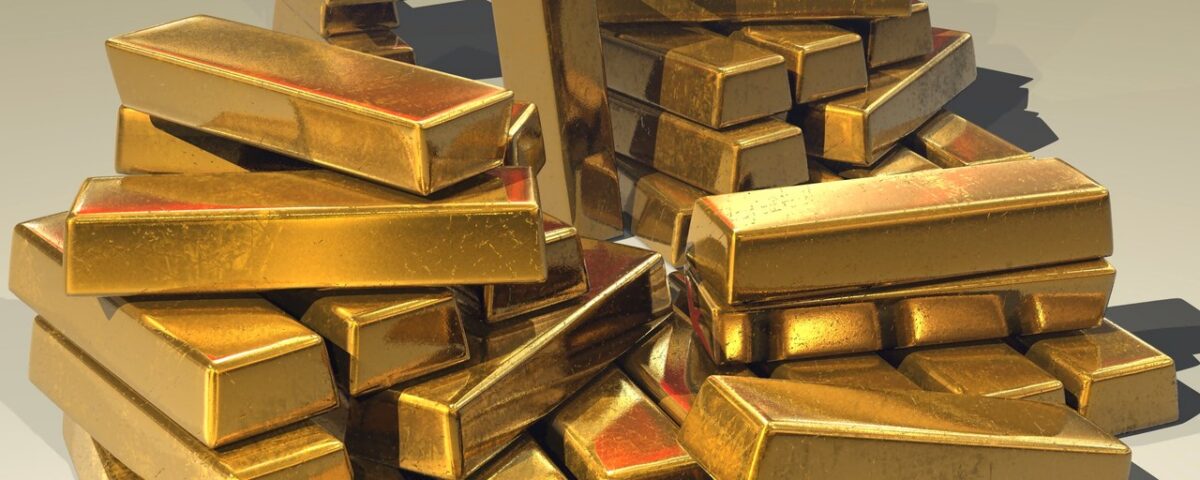
Could a bar stamped “10 oz gold” actually be tungsten underneath, and would a scale catch it? In 2012 a jeweler in Manhattan’s Diamond District drilled into a gold bar and found exactly that: a tungsten core under a shell of real gold. Nobody weighed their way to that discovery, because tungsten and gold are close enough in density that a scale can’t tell them apart. Lead is a different story. It is nowhere close to either one, and that gap is exactly why tungsten has been replacing it for the last two decades.
How Tungsten, Lead, and Gold Compare on Density
Pure tungsten is 19.25 g/cm3. Gold is 19.30 g/cm3, a difference of about 0.26 percent, below what a simple weight check can detect. Lead is 11.34 g/cm3, meaning tungsten runs about 1.7 times denser. Put another way, a part that weighs 1 lb in lead would weigh about 1.7 lb in the same volume of pure tungsten, or you could cut the volume by roughly 40 percent and still hit the same weight.
| Metal | Density | Relative to lead |
|---|---|---|
| Lead | 11.34 g/cm3 | 1.0x (baseline) |
| Tungsten (pure) | 19.25 g/cm3 | 1.70x |
| Tungsten heavy alloy | 17.0 – 18.8 g/cm3 | 1.50 – 1.66x |
| Gold | 19.30 g/cm3 | 1.70x |
The reason tungsten and gold land in almost the same place comes down to atomic structure, not coincidence. We covered the full explanation, lanthanide contraction and relativistic electron effects rather than crystal packing, in why tungsten is so dense. For what that means in a real part, our tungsten cube weight chart runs the same gold comparison by size, which is the calculation counterfeiters have been running in reverse since long before 2012.
What Tungsten Costs Compared to Lead and Gold
This is where the three metals stop looking anything alike. Lead is trading at roughly $0.87 a pound on the London Metal Exchange as of late September 2026, one of the cheapest industrial metals there is. Finished tungsten metal is running closer to $72 a pound in the US as of Q2 2026, and climbing, as China’s export restrictions tighten supply the way we detailed in why defense programs are moving off Chinese tungsten. Gold, trading above $4,300 a troy ounce in September 2026, works out to roughly $63,000 a pound, which is not a typo and not a comparable material at any practical scale.
- Lead: about $0.87/lb (LME spot, late September 2026)
- Tungsten, finished metal: about $72/lb (US industrial pricing, Q2 2026)
- Tungsten, scrap: roughly $4.65 to $10.05/lb depending on form and purity
- Gold: roughly $63,000/lb (from a spot price above $4,300/troy oz)
That scrap figure matters more than it looks. Tungsten heavy alloy, pure tungsten, and tungsten carbide all hold real value at end of life instead of going in a scrap bin for pennies, which is not true of most of what a machine shop throws away. If you have counterweights, crucibles, carbide inserts, or grinding sludge sitting around, Tungsten Buyers will assay it and buy it back, sorted or not.
The Safety Difference That Actually Matters
Density and cost explain why tungsten got a look. Safety is why it stuck. Lead is a regulated neurotoxin. OSHA caps airborne lead exposure at 50 micrograms per cubic meter as an 8-hour time-weighted average under 29 CFR 1910.1025, and the federal government has banned lead shot for waterfowl hunting nationwide since 1991 because birds were dying from ingesting spent pellets. Plenty of states and federal refuges go further and restrict lead fishing tackle too, for the same reason: it does not stay where you put it, and it does not stop being toxic once it is out of your hands.
Finished solid tungsten parts carry no comparable exposure limit, because there is no comparable hazard. The only real industrial-hygiene concern is fine metal dust generated during machining, which is standard practice for any metal, tungsten included, and not a reason a finished counterweight, sinker, or shot pellet needs regulation the way a lead one does. That is the actual driver behind tungsten replacing lead in aircraft counterweights and ballast, fishing weights, and non-toxic shot: it does the same job at a higher density without becoming an environmental liability afterward.
Gold is chemically inert and just as safe to handle as tungsten. It is also soft, expensive, and never enters this conversation as a real substitute, which is worth addressing directly.
Why Gold Isn’t the Practical Answer, Even at the Same Density
If gold matches tungsten’s density almost exactly, why isn’t it used for counterweights and shielding instead? Two reasons, and neither is subtle. First, cost: at roughly $63,000 a pound against tungsten’s $72, gold is about 875 times more expensive for the identical mass in the identical volume. Second, mechanical properties: gold is soft enough to dent with a thumbnail and deforms under sustained load, which disqualifies it from any structural or fastened application regardless of price. Tungsten heavy alloy, by contrast, presses, sinters, and machines to a tolerance and holds its shape under load.
Gold’s real role in this comparison is as a reference point. It proves tungsten belongs in the same weight class as one of the densest, most recognizable materials on Earth, at a small fraction of the cost and without gold’s structural limits.
What This Means If You’re Specifying, or Selling, These Metals
For a design that needs mass in a fixed envelope, the choice usually comes down to lead versus tungsten heavy alloy, not tungsten versus gold. We walk through that swap, part by part, in tungsten heavy alloy vs lead. Tungsten costs more up front and buys back a smaller, lighter, non-toxic part that does not carry lead’s disposal and exposure liability. That trade shows up across industries, from radiation shielding to the dense tool mass behind the tungsten bucking bars our sister brand USA Tungsten builds for aircraft riveting, where density in a hand tool translates directly into how much force gets absorbed on the far side of every rivet.
And if the tungsten you have is on its way out rather than into a design, whether that is heavy alloy counterweights, pure tungsten, powder, or carbide scrap, it is worth a phone call before it is worth a dumpster. Tungsten Buyers buys it back at end of life, at a price that reflects what tungsten actually holds compared to lead or steel scrap.
Tungsten Parts Wyoming manufactures tungsten and tungsten heavy alloy components, powder to finished part, in Laramie, Wyoming, under ISO 9001. For the density math behind these numbers, see why tungsten is so dense.