Tungsten Counterweights and Ballast: How Aerospace Balances Weight
August 11, 2026
What Are Tungsten Carbide Balls Used For? Bearings, Valves, and Flow Meters
August 25, 2026
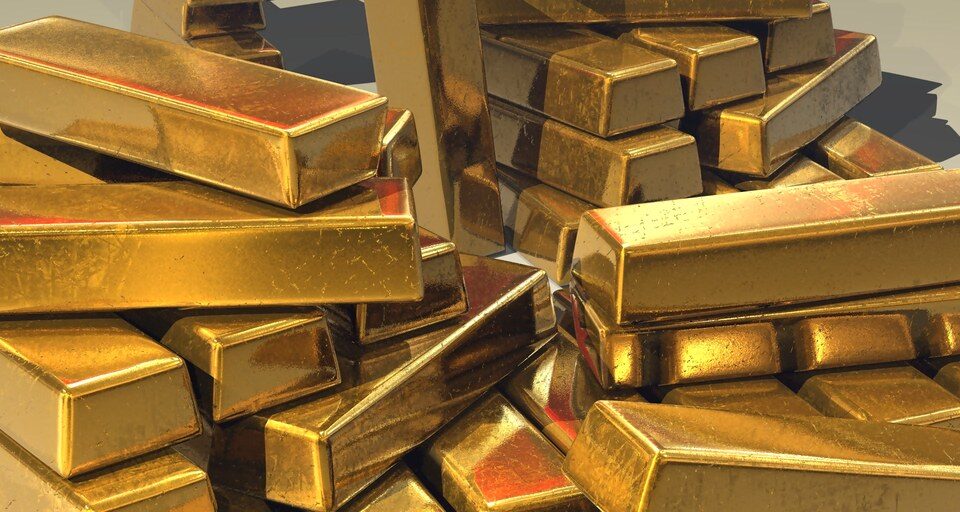
Tungsten has a density of 19.25 g/cm³, about 1.7 times heavier than lead and within a quarter of a percent of gold. Most explanations stop at that number, or wave at “heavy atoms packed tightly together” and move on. That explanation is incomplete, and the part it skips is the interesting part.
The real answer has less to do with how tungsten’s atoms pack and more to do with where tungsten sits on the periodic table. That distinction matters if you are specifying it for a job where mass in a fixed volume is the whole requirement, or trying to understand why tungsten heavy alloy outperforms a lighter metal you are used to working with.
Tungsten’s Density, By the Numbers
Density measures mass per unit volume. Tungsten’s 19.25 g/cm³ puts it in a small group of metals that are all considerably denser than anything most people handle day to day.
| Metal | Density (g/cm³) | Versus tungsten |
|---|---|---|
| Osmium | 22.59 | 1.17x |
| Iridium | 22.56 | 1.17x |
| Platinum | 21.45 | 1.11x |
| Gold | 19.30 | 1.00x |
| Tungsten | 19.25 | 1.00x |
| Uranium | 19.1 | 0.99x |
| Tungsten heavy alloy, Class 3 | 18.0 | 0.94x |
| Lead | 11.34 | 0.59x |
| Steel | 7.85 | 0.41x |
| Aluminum | 2.70 | 0.14x |
Notice tungsten is not at the top. Osmium and iridium both beat it, and platinum comes close. Tungsten’s real claim is narrower and more useful: it is the densest metal that is also affordable, non-toxic, and machinable into an actual part. More on why that matters below.
It Is Not About How Tightly the Atoms Pack
Tungsten crystallizes as body-centered cubic (BCC), a structure with two atoms per unit cell and an atomic packing factor of about 0.68. That means 68 percent of the available volume is actually filled by atoms. Gold, by contrast, is face-centered cubic (FCC), with a packing factor of about 0.74, the geometric maximum for identical spheres.
If packing efficiency decided density, tungsten should trail gold, aluminum, and copper, all of which pack more efficiently. It does not. Tungsten sits essentially tied with gold. Packing arrangement is not the variable doing the work here. Something else is.
The Real Reason: Lanthanide Contraction
Tungsten is atomic number 74, with a standard atomic weight of 183.84. It sits in period 6, directly below molybdenum, its lighter sibling in group 6 of the periodic table.
Molybdenum has an atomic weight of 95.95, roughly half of tungsten’s. A naive reading of the periodic table would predict tungsten atoms are proportionally larger than molybdenum atoms, the way most elements get larger as you move down a column. They are not. Tungsten and molybdenum have nearly identical metallic atomic radii, both close to 139 picometers.
The reason is what chemists call lanthanide contraction. Tungsten falls right after the lanthanide series, the row of 14 elements where the 4f electron shell fills in. Those 4f electrons are poor at shielding the nucleus’s charge from the outer electrons. As a result, effective nuclear charge climbs faster across period 6 than the simple row-by-row trend would suggest, and it pulls tungsten’s outer electron shells in tighter than expected.
Tungsten ends up packing roughly double molybdenum’s mass into almost the same atomic volume. That is why tungsten (19.25 g/cm³) comes in at nearly double molybdenum’s density (10.22 g/cm³), even though the two metals share a crystal structure and a column on the periodic table.
Relativistic Effects Tighten the Squeeze Further
There is a second contributor, one general chemistry courses tend to skip. Physical chemist Pekka Pyykkö’s work on heavy elements shows that in a nucleus as heavy as tungsten’s, the innermost electrons move fast enough for relativistic effects to matter: they gain effective mass and pull the inner electron shells in closer to the nucleus. That contraction reinforces the same squeeze lanthanide contraction produces. Neither effect alone fully explains tungsten’s density. A heavy nucleus, poor 4f shielding, and relativistic orbital contraction together explain why a period-6 metal this heavy is also this compact.
Why Isn’t Tungsten the Densest Metal on Earth?
It genuinely is not, and it is worth being precise about that rather than repeating the claim that shows up on most tungsten product pages. Osmium (22.59 g/cm³) and iridium (22.56 g/cm³) both outrank it. Osmium holds the title of densest naturally occurring element.
Neither one shows up in a counterweight or a shielding block, for practical reasons. Osmium is extremely brittle and, in powder or finely divided form, oxidizes at room temperature into osmium tetroxide, a volatile compound toxic enough that OSHA and NIOSH set its exposure limit at 0.002 mg/m³, among the strictest limits for any industrial compound. Iridium is similarly brittle, difficult enough to weld or machine that most iridium parts are made by powder metallurgy rather than conventional forming, and it is scarce: global production runs around 6,800 kg a year, a small fraction of gold production.
Tungsten, particularly as tungsten heavy alloy (W-Ni-Fe or W-Ni-Cu), is the practical answer instead. It holds nearly all of gold’s density, it is chemically stable and non-toxic in solid form, and it can be pressed, sintered, and machined into a finished part to a real tolerance. Ranking a few places down the density list but first on buildability is why tungsten, not osmium, ends up in the part.
Where the Density Gets Put to Work
Density stops being trivia the moment volume is fixed and mass is the requirement. Aircraft counterweights and ballast, radiation shielding, and vibration damping all share that constraint: a design envelope that cannot grow, and a mass target that has to be met inside it. Tungsten heavy alloy carries about 1.6 to 1.7 times the mass of lead in the same envelope, which is why it has displaced lead in most of those applications over the past three decades.
The same relationship is why what makes a tungsten bucking bar hit so hard for its size comes down to this exact density, not just tool design. Our sister brand, USA Tungsten, builds bucking bars from the same heavy alloy family for exactly that reason: more backing mass in a bar a rivet gun operator can still hold and control with one hand.
Grade matters here as much as it does for tungsten cube weight. Pure tungsten and tungsten heavy alloy are not interchangeable numbers. The ASTM B777 heavy alloy classes range from 17.0 to 18.8 g/cm³, all below pure tungsten’s 19.25, because the nickel-iron or nickel-copper binder that holds the tungsten powder together is lighter than tungsten itself.
Tungsten Parts Wyoming manufactures tungsten heavy alloy powder to part in Laramie, Wyoming, in the density and grade your application needs, not just “tungsten” as a generic material call. Full density ranges by class are on our technical data sheets, and the underlying material behavior is covered in our tungsten properties guide. If mass in a fixed envelope is the design driver, state the density range you require and we will confirm it on the Certificate of Conformance.
Frequently Asked Questions
Why is tungsten so dense?
Tungsten combines a high atomic mass (183.84) with an unusually small atomic radius for that mass. The small radius comes from lanthanide contraction, since tungsten follows the lanthanide series and its outer electrons are pulled in tighter than the periodic trend would predict, reinforced by relativistic effects on its inner electrons. The result is a lot of mass packed into a small atomic volume, giving a density of 19.25 g/cm³.
Is tungsten the densest metal on Earth?
No. Osmium (22.59 g/cm³) and iridium (22.56 g/cm³) are both denser, with osmium the densest naturally occurring element. Tungsten is the densest metal that is also affordable, non-toxic, and practical to machine into a finished part.
Is tungsten denser than gold?
Almost exactly the same. Gold is 19.30 g/cm³ and tungsten is 19.25 g/cm³, a difference of about a quarter of one percent, below what a simple weight check can detect.
Why do tungsten and molybdenum weigh so differently if they share a column on the periodic table?
Tungsten and molybdenum have nearly the same atomic radius, about 139 picometers, but tungsten’s atomic weight (183.84) is roughly double molybdenum’s (95.95). Same-size atom, almost twice the mass, so tungsten’s density (19.25 g/cm³) comes in near double molybdenum’s (10.22 g/cm³).
If osmium and iridium are denser, why isn’t tungsten replaced by them?
Osmium is brittle and forms toxic osmium tetroxide when exposed to air. Iridium is brittle, hard to weld or machine, and scarce, with global production around 6,800 kg a year. Tungsten heavy alloy is nearly as dense as gold, chemically stable, and can be pressed, sintered, and machined to a tolerance, which is why it gets specified instead.
How does tungsten’s density compare to lead?
Tungsten is about 1.7 times denser than lead, 19.25 g/cm³ versus 11.34 g/cm³. That is why tungsten heavy alloy has replaced lead in most counterweight, ballast, and shielding applications where the added mass matters and toxicity does not need to be part of the tradeoff.