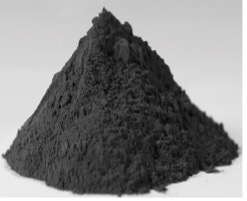
Almonty Industries signs three-year tungsten oxide supply agreement for US defense applications
May 7, 2025
What DFARS 252.225-7052 Means for Tungsten Buyers, Effective January 1, 2027
July 28, 2026
ASTM B777 sorts tungsten heavy alloy into four classes, numbered 1 through 4, based on how much tungsten the alloy actually contains. Class 1 runs 90% tungsten and Class 4 runs 97%, and density climbs right along with that percentage, from about 17.0 g/cm³ up to nearly 18.85 g/cm³. Once you know the class number, you already know most of what matters about a part’s weight and strength, before you ever open a data sheet.
The Four Classes at a Glance
| Class | Tungsten content | Density range | Hardness max (Rockwell C) |
|---|---|---|---|
| 1 | 90% | 16.85 to 17.30 g/cm³ | 32 |
| 2 | 92.5% | 17.15 to 17.85 g/cm³ | 33 |
| 3 | 95% | 17.75 to 18.35 g/cm³ | 34 |
| 4 | 97% | 18.25 to 18.85 g/cm³ | 35 |
Class 2 is the workhorse grade for most counterweight and ballast applications, dense enough to matter but still forgiving to machine. Class 4 shows up where every gram counts and the part has room to be small, radiation shielding and some aerospace trim weights among them.
Two Binder Systems, One Standard
Tungsten heavy alloy isn’t pure tungsten. It’s tungsten particles held together by a binder, and B777 allows two binder systems: nickel-iron (WNiFe) and nickel-copper (WNiCu). WNiFe is the more common choice and comes out slightly magnetic. WNiCu swaps the iron for copper and produces a nonmagnetic alloy, which matters for parts going near sensitive instruments, MRI equipment, or shipboard compasses.
Classes 1 through 3 are available in both systems. Class 4 is the exception. At 97% tungsten there isn’t enough binder left to hold the nonmagnetic copper system together at production strength, so Class 4 only ships as WNiFe. If a program needs both nonmagnetic and 97% tungsten in the same part, that’s a real conflict, not a sourcing problem, and the spec needs to relax on one side or the other.
What Changes in Strength and Ductility by Class
| Class | UTS, standard | 0.2% offset yield | Elongation, standard | UTS, nonmagnetic |
|---|---|---|---|---|
| 1 | 758 MPa | 517 MPa | 5% | 648 MPa |
| 2 | 758 MPa | 517 MPa | 5% | 648 MPa |
| 3 | 724 MPa | 517 MPa | 3% | 648 MPa |
| 4 | 689 MPa | 517 MPa | 2% | not produced nonmagnetic |
Elongation drops as the class number climbs. More tungsten means more mass in the same footprint, but a more brittle part. That’s the tradeoff. Class 1 and 2 can absorb some impact and deformation before cracking. Class 4 can’t take much before it fails outright. Anything that sees shock loading, drop risk, or repeated impact should stay in the Class 1 to 2 range regardless of how tempting the extra density looks on paper.
How TPW’s Certified Material Compares
The numbers above are ASTM B777 minimums, the floor every producer has to clear. Actual shipped material usually runs well above that floor. Here’s what we see on our own Class 2 and Class 4 lots against the B777 minimum:
| Property | TPW Class 2 | TPW Class 4 |
|---|---|---|
| Density | 17.5 to 17.7 g/cm³ | 18.4 to 18.6 g/cm³ |
| Ultimate tensile strength | 895 MPa | 885 MPa |
| 0.2% offset yield | 640 MPa | 625 MPa |
| Elongation | 30% | 16% |
Class 2 elongation at 30% runs six times the 5% ASTM floor. That margin is what lets a Class 2 part flex under load instead of snapping, and it’s why Class 2 stays the default recommendation unless a program has a specific reason to push to Class 3 or 4.
Which Class to Specify
For most counterweight and ballast work, Class 2 is the right starting point. It’s dense and it machines cleanly, with enough ductility to survive handling and assembly without babying it. Move to Class 3 when a program needs the extra density and can tolerate a stiffer, more brittle part. Class 4 is a narrow-use grade, reserved for radiation shielding or space-constrained aerospace trim where the part sees no meaningful shock load and every cubic centimeter has to pull its weight.
Whatever class ends up on the drawing, call it out with the ASTM B777 class number and, where a program requires it, the AMS7725F cross reference, along with the magnetic or nonmagnetic requirement. That’s enough for a supplier to quote and certify against without back and forth.
Tungsten heavy alloy in this same family, Class 3 in particular, is also what gets machined into aircraft riveting bars from our sister brand, where the density advantage over steel matters just as much as it does in a counterweight. If your program needs the alloy in cube or block form, standard heavy alloy shapes, or a custom part machined to your drawing, our team can quote against whichever class the job calls for. Full density, hardness, and tensile data for every class is also on our technical data page.