How to Machine Tungsten Heavy Alloy: Speeds, Feeds, and Tooling
September 29, 2026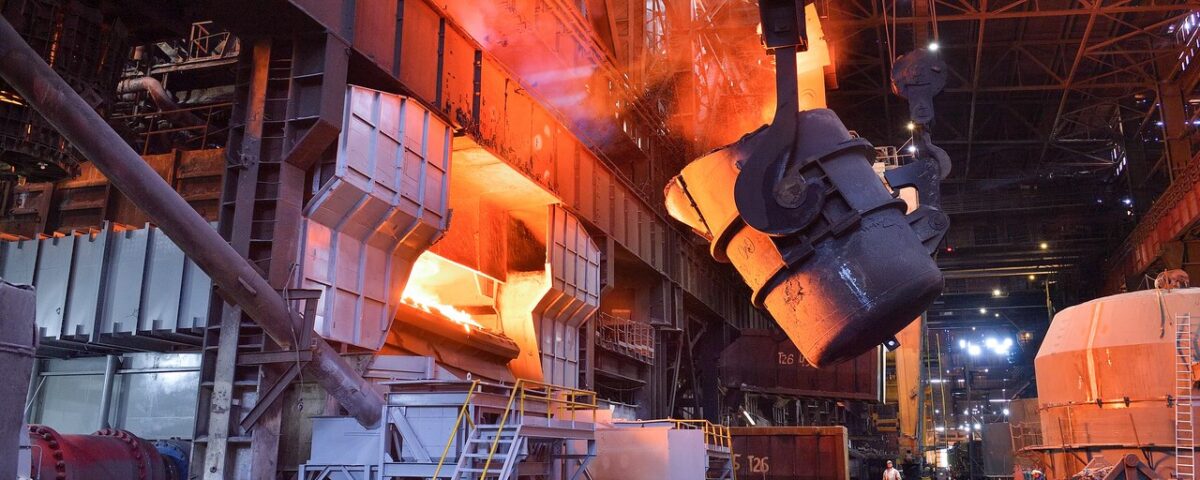
What is the melting point of tungsten, and does it matter for the part you are designing? Pure tungsten melts at 3,422 °C (6,192 °F), higher than any other metal. But the tungsten on most drawings is a heavy alloy, and a heavy alloy does not melt anywhere near that number. Long before melting, oxidation and brittleness become the real limits. This guide walks through each temperature that matters and what it means for the parts you buy.
What Is the Melting Point of Tungsten?
The International Tungsten Industry Association (ITIA) lists the melting point of pure tungsten as 3,422 ± 15 °C, which is 6,192 °F or 3,695 K. Only carbon holds out longer as a solid, and carbon does not melt at normal pressure. It sublimes straight from solid to gas, so tungsten is the highest-melting metal on the periodic table.
The reason is atomic. Tungsten atoms are bonded together by their 5d electrons, and those bonds take enormous energy to break. The same bonds give tungsten its other thermal traits: the lowest vapor pressure of any metal, very low thermal expansion, and the highest tensile strength of any pure metal at elevated temperatures.
| Thermal Property (Pure Tungsten) | Value |
|---|---|
| Melting point | 3,422 ± 15 °C (6,192 °F, 3,695 K) |
| Boiling point | about 5,700 to 5,930 °C, depending on the source |
| Vapor pressure at 2,000 °C | 8.15 × 10⁻⁸ Pa |
| Thermal expansion (room temperature) | about 4.3 to 4.7 µm/m·K |
| Thermal conductivity (room temperature) | about 173 to 175 W/m·K |
| Density | 19.25 g/cm³ |
Those figures match the Tungsten Properties Guide on this site. The boiling point varies by reference because it is very hard to measure at that temperature, so we show the range.
How the Melting Point Compares to Other Metals
Lead melts at about 327 °C, aluminum at 660 °C, copper at 1,085 °C, and iron at 1,538 °C. Tungsten sits nearly 1,900 °C above iron. That gap is why tungsten is the default choice when something has to stay solid in a place that would destroy ordinary metals. It also helps explain why the metal costs what it does; our comparison of tungsten, lead, and gold covers density, cost, and safety side by side.
For a sense of scale, the photo at the top of this page shows a ladle moving through the converter shop of a steel plant, where molten metal is handled by the ton (photo: DDEKK via Wikimedia Commons, CC0). Iron melts at 1,538 °C, and tungsten melts nearly 1,900 °C above that. A ladle pour like this is routine for iron and steel, and it is not how tungsten parts are made.
Why Tungsten Is Pressed and Sintered, Not Cast
You cannot melt tungsten in a conventional foundry. No ordinary crucible survives the temperature, and the molten metal would oxidize almost immediately. Electron-beam and vacuum arc furnaces can do it, but cast tungsten is brittle and hard to work, so most tungsten products are made by powder metallurgy instead. Fine powder is pressed into shape and then sintered, which fuses the particles together well below the melting point.
That is how the parts at Tungsten Parts Wyoming get made. We start from powder, press it, sinter it, and finish it to drawing in Laramie. You can see the full sequence on our manufacturing page, and the powder we start with is described on the tungsten powder page.
Tungsten Heavy Alloy Does Not Share the 3,422 °C Number
This is the point that trips up buyers most often. Tungsten heavy alloy is typically 90 to 97 percent tungsten held together by a nickel-iron or nickel-copper binder. The binder melts far lower than the tungsten does. In production, heavy alloy is liquid-phase sintered at roughly 1,450 to 1,500 °C, with the nickel-iron-tungsten liquid forming around 1,465 °C, according to published sintering research. A finished heavy alloy part is not a 3,422 °C material.
In practice, the binder sets the ceiling. If your application stays in the range of ordinary shop and equipment temperatures, heavy alloy is the right choice, and it machines far more easily than pure tungsten; our guide on machining tungsten heavy alloy covers speeds and tooling. If the part has to sit at sustained high heat, ask for the alloy datasheet or consider pure tungsten. The grade classes are laid out in our ASTM B777 breakdown, and the tungsten heavy alloy entry in USA Tungsten’s glossary gives a plain definition of the material and why its density matters.
What Happens to Tungsten Well Below Its Melting Point
Melting is the last thing to worry about. Several other behaviors show up first.
- Oxidation. In air, tungsten starts forming tungsten trioxide at roughly 400 °C. Above about 800 °C that oxide is volatile and evaporates as fast as it forms, so it stops protecting the metal. A study of tungsten oxidation found net weight loss from volatilization above 1,000 °C. This is why hot tungsten belongs in vacuum, inert gas, or hydrogen. Our pure tungsten crucibles are rated to 2,800 °C in inert or vacuum atmospheres for exactly this reason.
- Recrystallization. Worked pure tungsten recrystallizes at around 1,200 °C. Once it does, it tends to become more brittle at room temperature, so repeated trips through that range can shorten a part’s life.
- Brittleness at low temperature. Tungsten has a ductile-to-brittle transition, commonly reported between roughly 200 and 400 °C depending on how the material was processed. Below it, pure tungsten is brittle, so it should be handled and mounted with that in mind.
- Dimensional stability. Thermal expansion is less than half that of steel, so tungsten parts hold their size and fit as they heat and cool. Thermal conductivity is also several times higher than steel, so heat moves through the part quickly rather than building up in hot spots.
Where Tungsten’s Heat Resistance Gets Used
Light bulb filaments are the classic example. Incandescent filaments run at roughly 2,800 K, and tungsten is the metal that survives it. The same property puts tungsten in thermionic emission devices, heating elements, and furnace hardware. Closer to our own floor, tungsten crucibles are used for sapphire crystal growth, rare-earth metal melting, and other high-temperature vacuum processing, where the vessel has to outlast what it holds.
For a side-by-side look at how tungsten alloy behaves against steel more broadly, see tungsten alloy vs steel.
What the Melting Point Means for Scrap
The same property that makes tungsten hard to melt makes its scrap valuable. Old inserts, heavy alloy offcuts, and worn tungsten parts cannot just be dropped into a foundry heat the way steel scrap can. They have to be reprocessed back into the powder-to-part chain. That is the job of Tungsten Buyers, our scrap acquisition arm, which takes carbide, heavy alloy, pure tungsten, and powder. Because tungsten has no public price, the value of a lot comes from an assay of the actual material; this explainer shows how that works.
Frequently Asked Questions
What is the melting point of tungsten?
Pure tungsten melts at 3,422 °C (6,192 °F, 3,695 K), the highest melting point of any metal. The International Tungsten Industry Association lists it as 3,422 ± 15 °C.
Why does tungsten have the highest melting point of any metal?
Tungsten atoms are held together by very strong bonds formed by their 5d electrons. It takes a great deal of heat energy to break those bonds apart, which is why tungsten also has the lowest vapor pressure and one of the lowest thermal expansion rates among metals.
At what temperature does tungsten oxidize in air?
Oxidation starts at roughly 400 °C, when tungsten trioxide begins to form. Above about 800 to 1,000 °C that oxide evaporates instead of protecting the surface, so hot tungsten in air keeps losing material. Tungsten parts that run hot belong in vacuum, inert gas, or hydrogen.
Does tungsten heavy alloy melt at the same temperature as pure tungsten?
No. Tungsten heavy alloy is mostly tungsten with a nickel-iron or nickel-copper binder, and the binder sets the practical limit. In production the binder turns liquid at roughly 1,450 to 1,500 °C during sintering, which is less than half of pure tungsten’s melting point. For sustained heat well above that range, pure tungsten is the better material.
Can tungsten be melted in an ordinary furnace?
Not in any ordinary furnace, kiln, or torch. Melting tungsten takes specialized electron-beam or vacuum arc equipment, and it has to be done without oxygen. That is why most tungsten products are made by pressing and sintering powder instead of melting and casting.
What is the boiling point of tungsten?
References put it between about 5,700 and 5,930 °C. The International Tungsten Industry Association lists 5,700 ± 200 °C, and other sources give 5,930 °C (10,706 °F). Either way it is far beyond any temperature a part will see in normal service.